*The information in the following section was originally developed by a team that created a website for families focused on ‘raising deaf kids' (See About Us). Minor edits may have been made.
Read this section to find out how your child's being deaf or hard of hearing (DHH) might change the way she learns best.
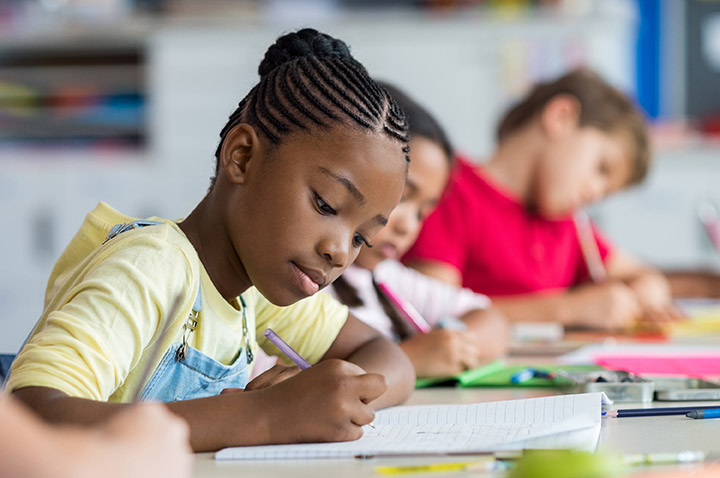 Some children who are DHH might learn in different ways than hearing children, or they might need extra help to learn.
All children learn in different ways. They learn from watching people, reading books, and trying new things. Hearing children also learn from listening. They hear so much information every day. They listen to people sitting on the bus, at the grocery store, and the teacher at school. They listen to conversations at the dinner table, even when it is not meant for their ears. And they learn from talking to friends.
Children who are DHH can learn well, too. They can do very well in school and in life. Many children who are DHH finish high school and go to college and graduate school.
They may miss some of the learning that happens from listening in on others. They may need to learn this information in other ways.
How your child learns
Not all children learn the same way. Some children learn best by reading about something. Other children learn best by trying to do something on their own. Some kids learn better by themselves, and other kids learn better by working in a small group.
Your child probably learns a lot from the things she can see. Many children who are DHH use things they can see, or visual cues, to help them pick up on what they may not hear.
Children who use sign language use their sight and signs all the time to say what they want to say, and to understand what other people say. Children who are DHH who don't use sign language still use their sight to help them learn. For example, your child might watch what the teacher writes on the blackboard very carefully. Or she may watch the teacher's face for speechreading cues to help her understand what she sees and hears.
You know your child best. You know better than anyone else how she learns. Tell her teachers how she learns best.
Tell your child exactly what you want her to know.
Children need to learn about things other than math, reading, and science. For example, children need to learn about their family.
Every family has their own rules…Like putting your dishes in the sink after dinner, or not using certain bad words. Families have different beliefs too, like religious beliefs, or believing that it's okay or not okay to behave in certain ways.
Hearing children usually figure out these rules and beliefs as they go along. Without even trying, they pick up information about their family by listening to conversations at the dinner table, or in the car. Children who are DHH may miss this information.
Help your child learn all of the family's rules and beliefs by telling her about them very clearly. You will probably need to say things that you wouldn't spell out for a hearing child. If your child doesn't understand the first time, try to tell her in a different way. When your family is talking about a rule or belief, try not to say things like, "I'll tell you later" to your child who is DHH. You might forget later, and your child will feel left out.
Just make sure to explain the family's beliefs to your child. This way, she'll learn the rules are, and she'll know that she's an important part of the family! Also visit
Learning from my Family - My Baby's Hearing (babyhearing.org)