Information in this section was originally developed by a team that created a website for families focused on "raising deaf kids"- (see
About Us). The content may have been edited or updated.
Read this section to find out how toddlers grow and learn, and how you can help your child.
You may be very confused as to what to expect from your toddler. What is typical for a toddler? How should you treat your toddler? Will things be different because your toddler is deaf or hard of hearing?
Read these sections to find answers to these questions and more.
.jpg) How Your Toddler Grows
How Your Toddler Grows
What to expect Children who are DHH may follow different paths in growing up. This could be because they were born too early or had medical problems. Read this page to learn how your toddler may grow.
How Your Toddler Learns
Toddlers learn from hearing people talk or seeing people use sign language. Learn what kinds of simple, but important things your toddler may be missing out on.
How You Can Help Your Toddler
All toddlers need love and attention. Your toddler is no different. You may have to SHOW you toddler what you mean in addition to saying it. Read this page to learn how to do this.
How Your toddler grows: What to expect
*Information in this section was originally developed by a team that created a website for families that focused on "raising deaf kids" (see About Us). Minor edits and updates may have been made.
What you can expect
There is no fixed timeline for each child's development. There are many books that say how your child should develop, but each child will grow in his own way.
Some children who are deaf or hard of hearing may not follow "typical" development in all areas.
- This may be because a child was born too early.
- This may be because a child has medical problems.
- A child who is deaf or hard of hearing may take longer than others to develop language and communication skills for various reasons.
You will learn to communicate often with your child to foster language development!
Write down important steps in your child's life.
This will help you see how much your child is really growing! Write down when and how your child does things for the first time:
- Your child's first smile
- When your child first reaches out for a toy
- The first time your child points
- When your child takes his first steps
- Your child's first words or signs
Keeping a record will help you see how much growth there really is!
Life can be hard before your child develops a language that you use. It's hard for the child who can't hear clearly and who can't speak to tell you what he wants. Other times, the child may not understand what is happening when you change what you're doing. He may become confused when you go someplace unfamiliar. Over time, you will learn strategies for addressing these needs.
Communication and Your 1- to 2-Year-Old (for Parents) - Nemours KidsHealth
Learning, Play, and Your 1- to 2-Year-Old (for Parents) - Nemours KidsHealth
How Your Toddler Learns
Children learn by listening to and watching other people communicate.
When we're very young, we learn so much without even trying. We learn just by listening to and observing people talk.
- We share information about what's happening around us.
.jpg)
- We tell each other about what's happening in our families and neighborhoods.
- We talk about our thoughts and feelings.
Children who are deaf or hard of hearing (DHH) can miss a lot of those little daily comments.
Three important things that children learn about by listening and watching:
1. Time
- When we talk, we discuss times - yesterday, tomorrow, next week - in a few minutes. These words take awhile for all children to learn.
- A child who is DHH may miss some basic time words like 'now' and 'later.'
- For children who is DHH, things may just seem to happen.
- Things happen for no clear reason.
- Things happen without a sense of time.
2. How and why things change
When we talk, we tell each other what we plan to do. A child who is DHH may:
For a child who is DHH, it is important to learn about what comes next.
Help your child before she even begins to talk.
- Use gestures when you talk.
- Use signs if your child is learning to sign.
- Show
pictures and photographs of the place you are going to.
- Use anything else you can think of to help your child remember and associate with the place you are going (i.e., a grocery bag).
Without this extra help, some children may become nervous when things change. They will try to keep to the same, familiar routine.
For more information, visit:
Keeping Your Child Informed - Positive Parenting - My Baby's Hearing (babyhearing.org)
3. What feelings are
If your child can't hear, she may not know the words for feelings.
Your child may not understand what feelings are.
Parents talk about feelings with their children a lot.
Some children who are DHH may get upset easily if they can't tell you what they're feeling.
For more information, visit:
How do I feel? - Building Concepts - My Baby's Hearing (babyhearing.org)
How You Can Help Your Toddler
*Information in this section was originally developed by a team that created a website for families that focused on "raising deaf kids" (see About Us). Minor edits and updates may have been made.
Young children have strong feelings
We all have feelings. Young children especially have very STRONG feelings! But they don't know how to tell you how they feel. It may be hard for your child to learn about important feelings, like sad, mad, or happy.
How you can teach your child about feelings
- Show your child how you feel.
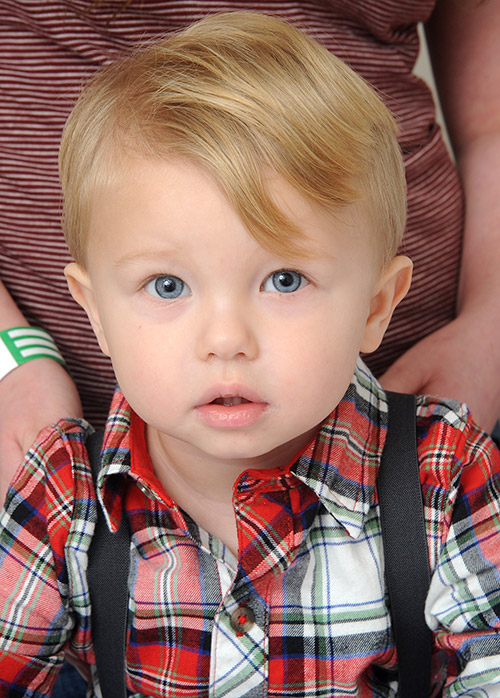
- Tell your child how you're feeling. Do it even if you're just feeling tired or silly.
- Show how you feel with strong gestures, sign language, and/or speech. If speaking is your best way to communicate, show emotion when you speak. You want your emotion on your face to match what you are feeling (e.g., smiling when happy). The same is true for signing – the emotions on your face should match what you are signing (smile when signing 'happy').
- Point out how people are feeling.
- Point out how people's expressions show what they feel. Do it when:
- You look at picture books together.
- You watch children's programs together.
- You go outside and observe people together.
Be sure to teach your child about feelings when you are both happy and having fun. All children learn better when they are playing and having a good time. Use feeling words as you talk about them and comment on feelings when they happen (e.g., happy, silly, mad, upset). See:
How do I feel? - Building Concepts - My Baby's Hearing (babyhearing.org)
How to help your child communicate
Ask your child's Early Intervention teacher (family-infant specialist) to guide you in learning signs for feeling words if your child is signing. If you are using spoken language, talk about what your child is feeling.
Write down the words or ideas that you don't know how to communicate. Ask your early intervention teacher what's the best way to say or sign them to your child.
When your child is upset, tell her what you observe. Show her the signs for those feelings if you know them. If you are using spoken language, name the feeling (You are upset! You don't like that).
Even if you don't think your child is ready to learn these signs, she may pick them up very quickly. During the toddler years, not all children have the language to tell you what they want. Many parents say that having sign language is helpful in getting through these years.
How to help your child when he becomes upset
When your child starts getting upset, try these things to help keep both of you calm:
- Stop and think about how your child might be feeling.
- Look at the situation through your child's eyes.
- Listen to your child. Listen with your ears, eyes, heart, everything.
If your child is having a tantrum, it's hard for her to listen at that time. Go back after the tantrum and try to talk to your child about her feelings.
For more information, visit:
Dealing with Tantrums - Positive Parenting - My Baby's Hearing (babyhearing.org)